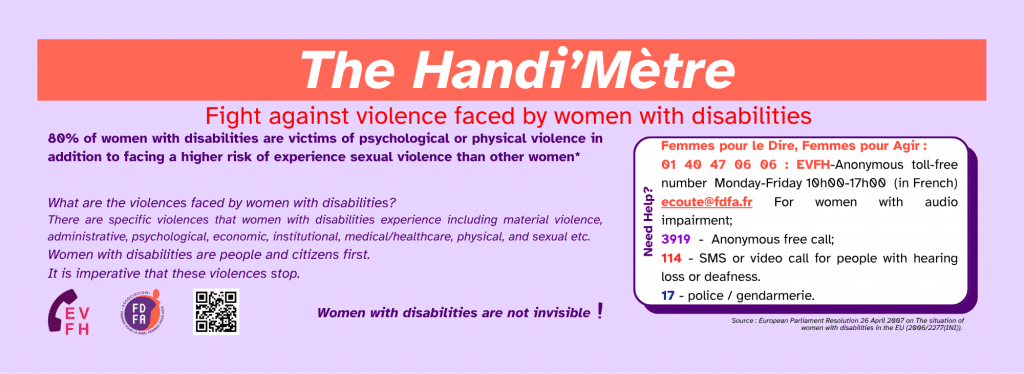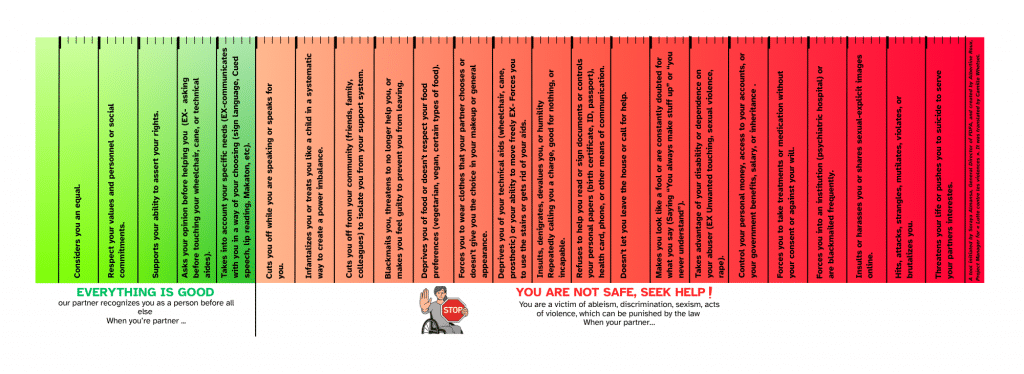
The Handi’Meter is an innovative tool initiated and supervised by Soraya Almansa, Executive Director of FDFA, and developed in collaboration with Albertine Roux, Project Officer for the Prevention of Violence Against Women.
It was designed to help women with disabilities identify, understand, and name the violence they experience.
While existing assessment tools rarely take into account the specific realities faced by women with disabilities, the Handi’Meter provides a clear, accessible, and disability-inclusive framework. It enables women to recognize abusive situations, assess their seriousness, and understand that they have the right to safety, dignity, and respect.
What is the Handi’Meter for?
The Handi’Meter helps users to:
* Identify different forms of violence, including psychological, physical, sexual, economic, institutional, and medical violence.
* Assess the severity of abusive behaviours.
* Distinguish between healthy relationships, warning signs, and dangerous situations.
* Provide professionals with a disability-sensitive awareness and prevention tool.
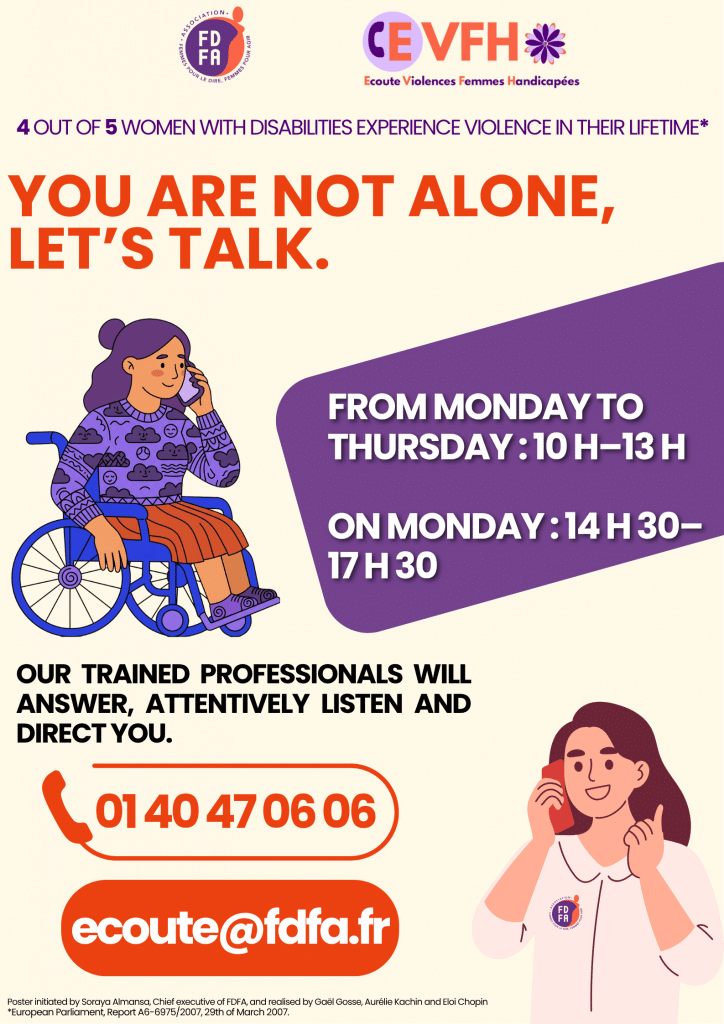
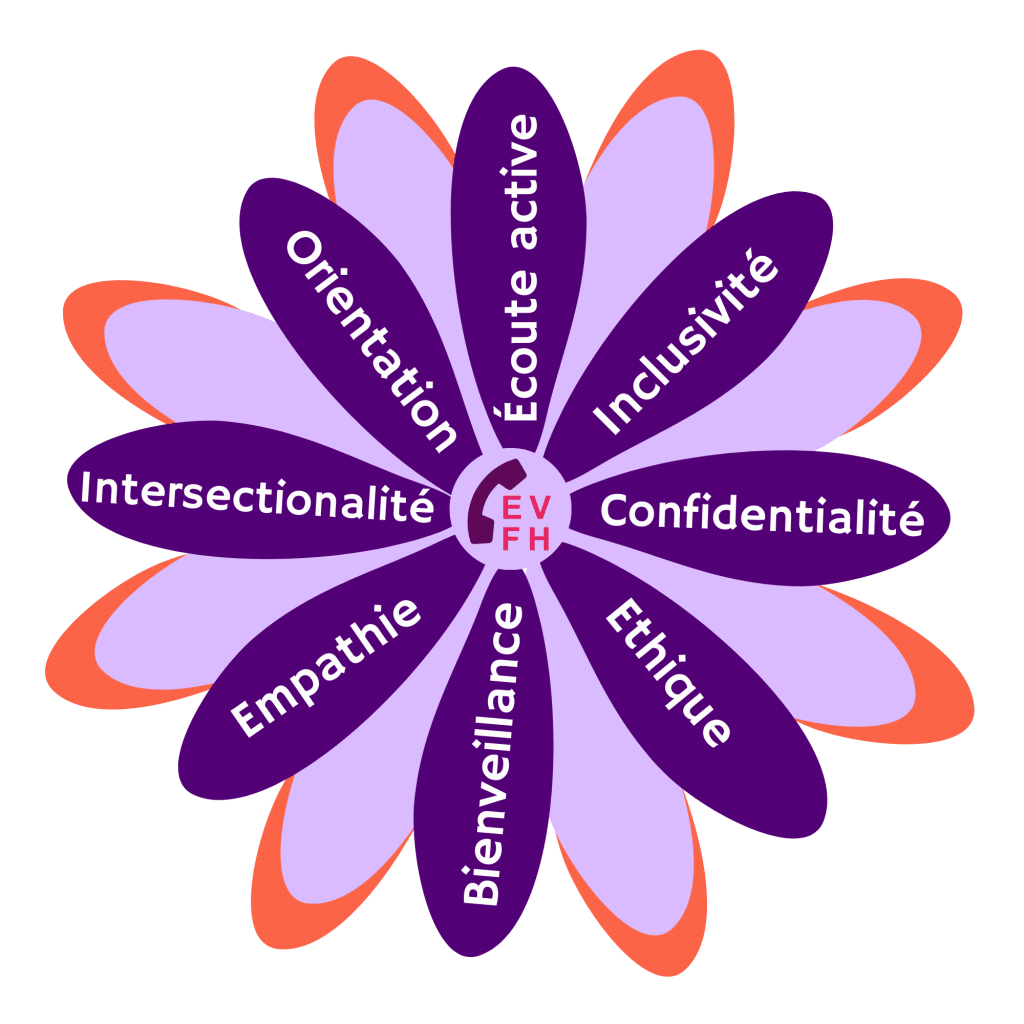
* Support discussions during counselling sessions, workshops, and FDFA’s national helpline.
Who is it for?
The Handi’Meter is intended for:
* Women with disabilities, regardless of the type of impairment.
* Family members, relatives, and caregivers.
* Professionals working in the health, social care, medico-social, legal, and justice sectors.
A tool designed with and for women with disabilities
The Handi’Meter was developed from real-life situations reported through FDFA’s national helpline, which receives more than 3,000 calls each year, as well as from interviews conducted with women supported by the association.
It is based on a thorough analysis of intersectional violence and adopts an approach grounded in care, accessibility, empowerment, and the recognition of women’s rights.
A unique tool in France
The Handi’Meter is currently one of the very few tools in France specifically designed for women with disabilities. It takes into account:
* Dependency and loss of autonomy.
* The role of caregivers and family members.
* Medico-social institutions and services.
* Constraints directly related to disability.
* Institutional violence, which is often overlooked by mainstream assessment tools.
Discover the Handi’Meter.